AI workflow automation that starts with payback. Built task by task.

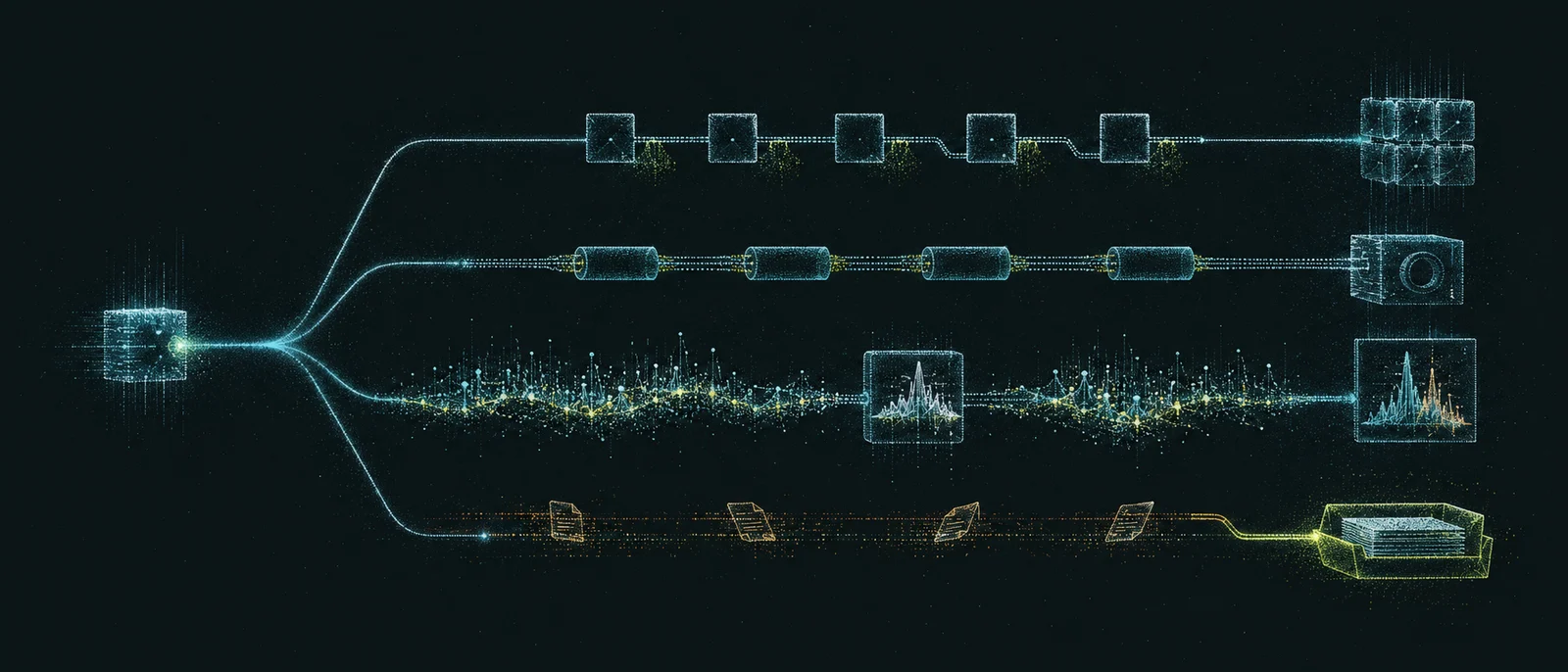
We start with the workflow most likely to pay back. Then we split it into jobs. Rules for what should never vary. APIs for moving data. A task specific AI model for one job that needs it. A person for the exceptions. Your existing systems stay the systems of record. You keep what we build.

Request your audit

Jeff reads every request and replies from a real inbox. If the work is not ready or not worth automating, he will tell you and save you the call.

Some work should stay manual.

We ask two questions. Will the process hold still long enough to automate? Will the time saved or errors prevented justify the build?

If a process changes too often, or a person can do the work cheaper, we say so. Building the wrong thing is expensive for everyone.

One workflow. Different kinds of work.

We define the job before we choose the tool. A fixed calculation does not need AI. A messy document might.

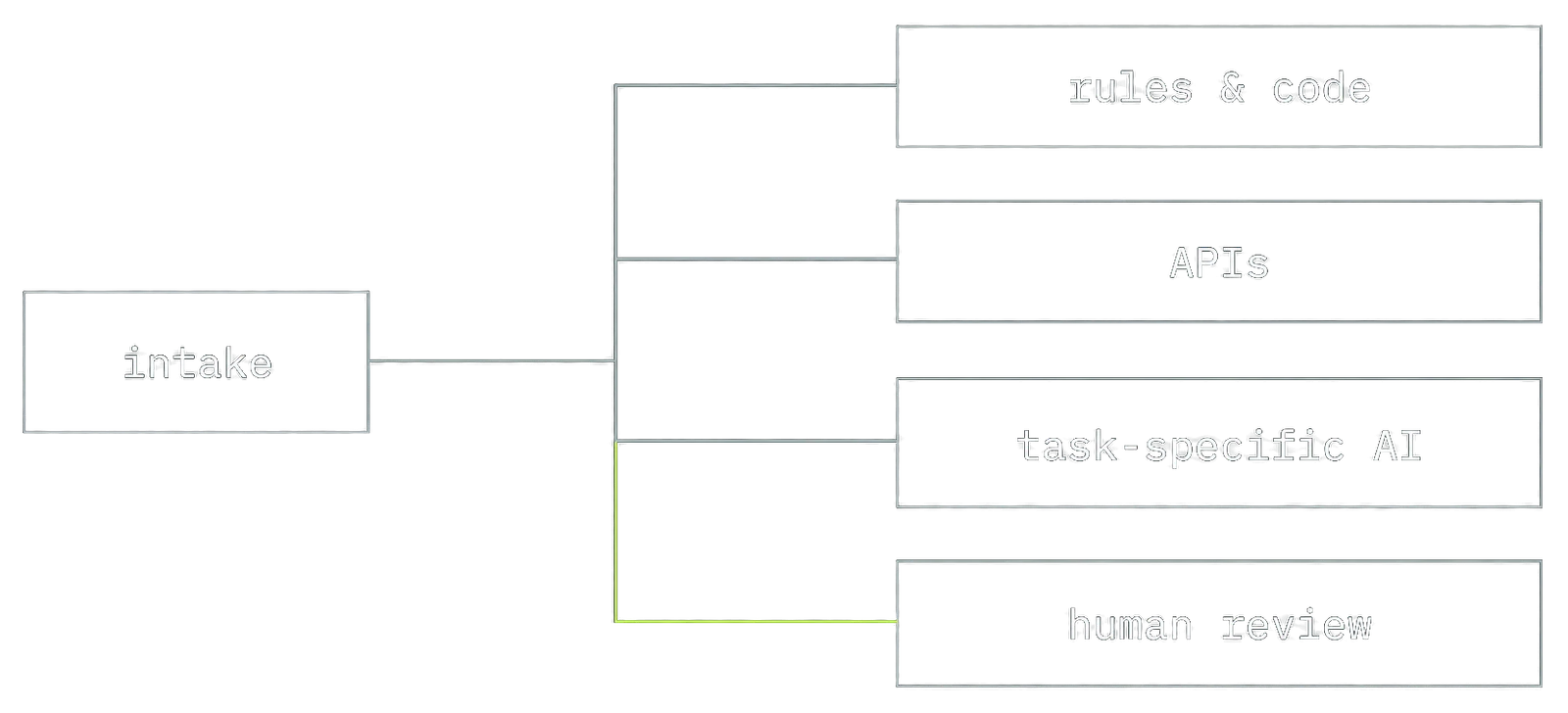
One intake routed to four handlers: rules and code, APIs, task-specific AI, and human review.
The answer should be the same every time
Rules and code

Use exact logic when the answer should not vary.

One system needs to tell another what happened
APIs and integrations

Move the data. Start the next step. Keep the source system where it is.

The input changes from case to case
Task specific AI

Give the model one job, such as classifying a document or extracting its fields.

The system is uncertain or the consequence matters
Human review

Send the work and its context to a person. Do not let the system guess.

What happens between the audit and a running system.

The first call is for ranking the work. It is not enough time to design your operation. If there is a fit, the work gets more specific before anything goes live.

  1. 01

    Map the work as it happens now

    We trace where it starts, who touches it, which system owns the record, and where it waits or breaks.

  2. 02

    Define the jobs and the exceptions

    Each step gets a clear job. We decide what can continue automatically and what should stop for a person.

  3. 03

    Build and test the workflow

    We test against the work your team actually sees, including the awkward cases, before your team depends on it.

  4. 04

    Maintain what is running

    We watch where exceptions collect and adapt the workflow as your operation, systems, and rules change.

What that looks like in a real workflow.

For one financial services client, documents arrived by email. The workflow classified them, extracted the fields, checked the data, found the approver, and sent uncertain work to a person.

Documents flow through classification, field extraction, data validation, and approver routing, with uncertain cases sent to a person.
Documents handled each month
500+
First pass extraction accuracy
94%
Average processing time
Three days to under four hours

Human review caught the remaining 6%. That 94% belongs to this client's documents. We will not quote your number before we have seen your documents. Results differ by workflow, data, and operating context.

Read the document processing case study

If we stop working together, the system keeps working.

Your environment
The automation runs in your Microsoft environment, under your accounts, alongside the software you already use.
Your source of truth
The ledger, HR system, CRM, or other source system stays in charge. We build the routing around it instead of replacing it.
A human lane
Uncertain or consequential work goes to a person with the original source and the system’s best answer.
While we work together
Ongoing support is included. We maintain the workflow and change it as the operation changes.
Your exit
You keep the flows, code, dashboards, and integrations. If we stop working together, they keep running without us.

Depending on the work, implementation may use Microsoft 365, Azure, Power Platform, APIs, or custom code. The workflow determines the tools.

Tell Jeff what is eating your team's time.

Two sentences is enough. The audit takes 30 minutes. You leave knowing the two or three processes most likely to pay back first, and roughly what each takes to build. Useful whether or not you hire us.

Request your audit

Jeff reads this personally and replies within one business day. No deck or document upload. No fee and no obligation.